Introduction
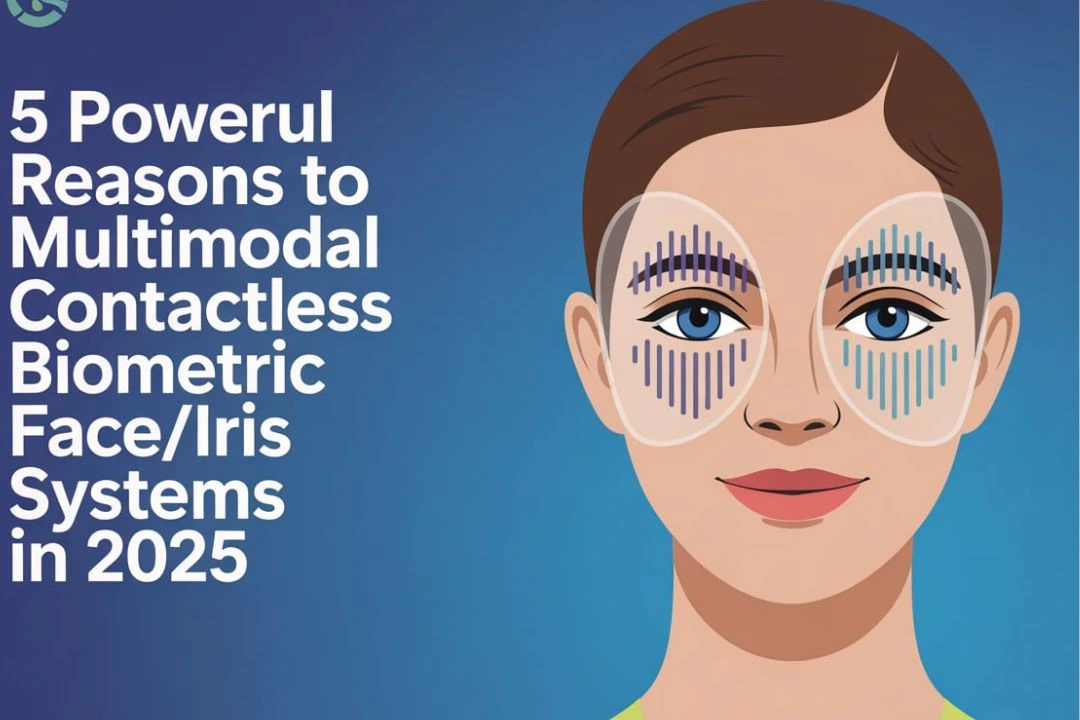
In today’s digital age, both security and convenience are essential. Multimodal contactless biometric face/iris systems are a new trend that uses advanced technology to make identification through human facial and eye (iris) patterns more secure, better, and convenient. In this article we will discuss in detail the “5 key reasons” that will help you understand why these systems are making a significant difference.
What are “multimodal contactless biometric face/iris systems”?
The specialty of multimodal systems is that they are not based on just one biometric attribute but rather obtain information from both the face and the eye (iris), which significantly increases the accuracy of identification.
When these systems are contactless, they do not require any hands to touch the device — meaning facial or eye scanning is completed from a distance.
Such systems, namely multimodal contactless biometric face/iris systems, are proving to be very effective in modern airports, smart shops, secure locations — and especially in terms of hygiene in situations like COVID-19.
5 main reasons:
1. Excellent security and suitable accuracy
Multimodal contactless biometric face/iris systems use advanced encryption, liveness detection, and spoofing countermeasures to secure data.
Because recognition involves both the face and the iris, these systems enable more accurate and reliable recognition by reducing the potential for errors. These systems reduce the potential for fraud by matching against secure templates in a database.
2. Speed and quick response
Since scanning is contactless, the identification process is completed very quickly.
These systems are very effective in environments such as security checkpoints, building access, and ATMs. Multimodal contactless biometric face/iris systems perform complex tasks smoothly without any delay, which is a very positive experience for the user.
3. Creative comparison (accuracy and backup)
Single-modal systems — that is, based on face only or iris only — can occasionally produce false positives/negatives.
But in multimodal systems, face + iris together provide double security.
If there is low light or partial face obstruction, iris scanning compensates for this deficiency, maintaining the performance of the algorithm.
This is why multimodal contactless biometric face/iris systems are known for their highly reliable recognition.
4. Complete hygiene and “contactless” use
During COVID-19 or other infectious diseases, touch-based systems (such as fingerprint scanners) can pose a health risk.
Multimodal contactless biometric face/iris systems, on the other hand, do not require any hands — scanning is possible from a distance.
This touchless method is safer and healthier for both the user and the system.
5. Future needs and integration (smart cities, IoT)
Real-time authentication is essential in smart cities, automated transportation, and IoT systems.
Multimodal contactless biometric face/iris systems can be easily connect with smart cameras, drones, and other city infrastructure.
For example, a glance at a smart gates give access easily and speed up the movement.
This integration enables a more automate, strong, secure system.
Challenges and potential pitfalls
Privacy and data protection:
Face and eye data are very sensitive If the data is stolen for any reason, the user’s privacy could be seriously compromised.
Therefore, secure encryption and strict data protection laws are essential.
Cost and structure:
The hardware and installation costs required to implement such advanced systems can be quite high—especially in developing countries.
Environmental Effects:
Bright light, glare, or obstacles can affect scanning accuracy.
In these cases, the system requires strong face recognition and iris capture hardware.
Public acceptance and ease of use:
Some people are doubtful about biometric systems.
Therefore, it is very importnat to educate people about these technology.
Conclusion
The result is that multimodal contactless biometric face/iris systems are setting a new standard for security, convenience, and technology in the coming era.
Their 5 core aspects — security, speed, accuracy, robustness, and integration — make their use effective and powerful.
However, privacy, cost, and environmental issues cannot be ignored.